
In many cases, residential fires can be avoided through adequate prevention and by getting into good habits. But once a fire begins to spread, immediate evacuation is vital. What should you do in such cases to ensure your own safety and that of your loved ones?
In Luxembourg, the “Corps Grand-Ducal d’incendie et de secours” (CGDIS) saves numerous lives each year. In 2024, firefighters fought 2,764 fires of all different sizes, equivalent to 7 to 8 fires or fire outbreaks per day on average. Day and night, around 4,000 volunteers work in shifts across the country to intervene in the event of danger, to protect human and animal life, or our environment.
Electrical installation and heating system
Residential fires are relatively common and yet often avoidable. There are multiple causes involving obsolete or incorrectly adjusted electrical installations, specifically:
Does your electrical installation comply with current regulations, authorisations, legislation and directives?
In general, an approved inspection authority will provide a compliance certificate for new buildings, after major renovations or for new connections. If you do not have this certificate yet, or if your certificate is very old, you can contact an approved electrician who will check your installation.
Are your electrical appliances suitable for your usage? Are they in good condition?
For more advice on electrical safety, you can consult the Creos Luxembourg website. With regard to your heating system, regular maintenance by an approved professional is also essential. Furthermore, in Luxembourg, regular checks are mandatory to limit polluting emissions and to guarantee the safety of combustion installations. The frequency of these checks is as follows:
- every 2 years for a wood-fired boiler or a stove connected to the heating circuit
- every 2 years for an oil-fired boiler
- every 4 years for a gas boiler
Pour plus d’informations, le Portail de l'Environnement détaille les installations concernées ainsi que les règlements grand-ducaux applicables.
Essential equipment
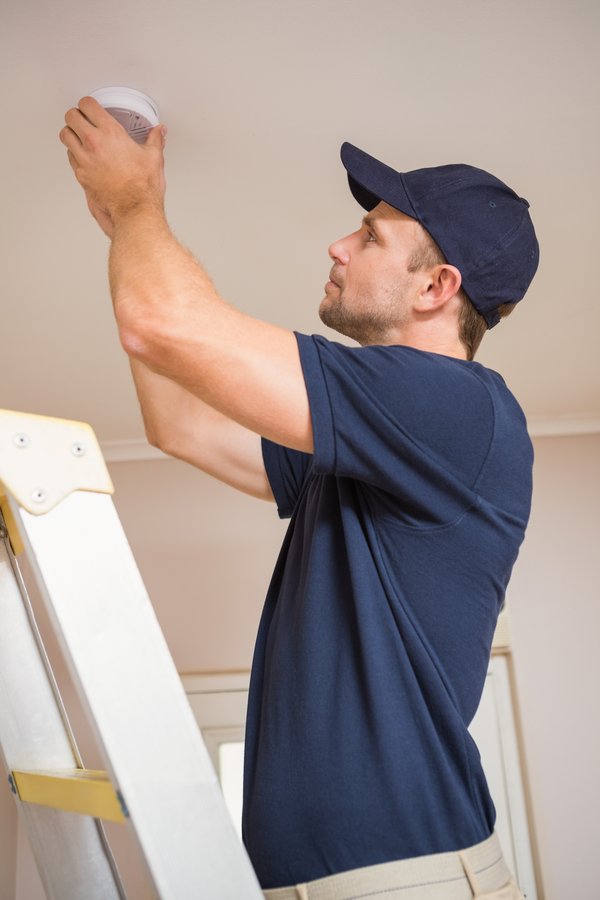
In terms of the equipment that helps to ensure your safety in the home, smoke detectors alert the occupants inside the building quickly, by emitting an audible warning signal as soon as an abnormal amount of smoke is detected. Their role is particularly crucial at night. They will wake you if there is a problem and help to reduce the risks of poisoning.
Since 1 January 2023, smoke detectors have been mandatory in all buildings that include at least one housing unit. It is important to check regularly that these are working properly and to replace their batteries when necessary.
Smoke detectors can be bought in DIY stores, department stores, specialist shops or even online. To check the reliability of the device, check that it conforms to European standard EN 14604. For their installation it is still best to call an electrician who can connect the detectors to your alarm system. For new buildings, the developer plans for these devices to be installed from the project design stage.
It is also wise to have one or more fire extinguishers and a fire blanket in the house. Keep this equipment in easy-to-access places, close to potential sources of fire (for example in the kitchen).
Behaviours to adopt on a daily basis
On a daily basis, it is advisable to avoid several risk behaviours.
- Smokers: never smoke in bed and take care to extinguish your cigarettes properly before disposing of them
- Candles: place them on a stable surface, never light them close to flammable materials and put them out before you leave the room
- Children: keep lighters and matches out of the reach of young children
- Barbecue: never use alcohol to light or reignite a barbecue
- Flammable liquids and products: store them away from sources of heat and use them carefully in a well-aired room.
- Gas: ensure gas appliances are used only in well-ventilated spaces.
- Kitchen: always stay nearby when cooking food
- Electrical appliances:
- avoid leaving them on standby when not in use
- do not overload extension leads
- avoid putting flammable materials close to sources of electricity or heat
- Laundry: do not dry your laundry on radiators and take care to remove fluff regularly from the grill at the back of your tumble dryer and washing machine

Prevention around the house
It is important to maintain plants and vegetation around the outside of the house, to prevent them from becoming too overgrown. In the event of intense heat and drought, they could represent a danger. Thin them out regularly, cut back hedges and trees, clear away dry plant residue such as dead leaves.
Store your firewood in a suitable space and, if possible, away from your house.
Fireproof your wooden garden furniture and keep all flammable products in a fireproof location.
Provide external access to your house to facilitate an intervention by the emergency services.
Draw up an evacuation plan
In an emergency, it can become very difficult to find the exit quickly. Drawing up an evacuation plan in advance can save your life and the lives of your loved ones. In residential buildings, evacuation plans and emergency exits are provided: take the time to make a note of where they are and memorise them.
If you live in a detached house, establish a main evacuation route with all of the occupants, as well as an alternative route in case the first one cannot be used.

When a fire breaks out
If the fire has only just started, an attempt to extinguish it can prevent the fire spreading, as long as the intervention does not pose a risk to your safety.
To put out a small fire, you need to use the right methods. For example, you must never throw water on a grease fire (involving cooking oil or fat etc.) When water comes into contact with very hot oil, it vaporises instantly, expanding suddenly and spraying burning grease everywhere. This can cause a violent explosion. It is advisable to cut the oxygen supply by covering the recipient containing the flaming grease with a metallic cover for example or a fire blanket.
Attention! Even if the flames seem to have been extinguished, always contact 112. A fire can continue to smoulder invisibly. The CGDIS has thermal cameras that allow them to detect these hidden outbreaks.
Uncontrollable fires
If you can’t get the fire under control, you must evacuate immediately. The estimated time to be able to get out of your home safely is around 3 minutes. To gain time, close the doors. Even if they are not fire doors, they will hold back the smoke (which can be toxic) for longer. Closing doors can also help to maintain a lower temperature in the rooms that have not been affected.
Once you are safe, call 112 and warn your neighbours.
What if you can't get out safely? Get down on the ground, you will be able to see more clearly there, and you will probably breathe better, because hot smoke tends to rise. Close the internal door to the room you are in and phone 112. Explain your position to the person on the other end of the line and wait for the emergency services.
The importance of home insurance
Although not mandatory in Luxembourg, home insurance is strongly recommended to protect your assets and your peace of mind. If you are renting, you should be aware that, in your tenancy agreement, your landlord may demand that you have it. In the easyPROTECT Home contract, the fire guarantee is part of the basic coverage and covers the material damage caused by fire, but also by smoke, soot or the appropriate fire extinguishing means.
What does your insurance actually cover?
In the event of fire, your home insurance can cover material damage (furniture, equipment, personal belongings), the cost of temporary accommodation if your home becomes uninhabitable, as well as your civil liability if the fire spreads to your neighbours.
It is important to check regularly that the insured sum set out in your insurance contract for furniture insurance matches your current possessions. To facilitate this inventory, use our interactive simulator. In just a few clicks, you can obtain a reliable evaluation for your goods to guarantee adequate cover and to avoid being under-insured in the event of an incident.
LALUX by your side after an incident
If a fire occurs, don't hesitate to contact your LALUX agent immediately. They will support you through this experience: they will guide you through the process, step-by-step, help you to compile your incident claim file and liaise with any other actors involved. Because, over and above compensation, supporting you and ensuring your serenity are what counts the most.
What is the CGDIS?
In Luxembourg, there is a single telephone number to dial in case of danger: 112. On the other end of the line will be the “Corps Grand-Ducal d’incendie et de secours” (CGDIS), a service that groups together all of the country’s emergency services: the communal fire and rescue services, the Civil Protection units, the emergency medical assistance service (Service d’aide médicale urgente – SAMU), the fire and ambulance service for the City of Luxembourg and the airport fire services.
The tasks of the fire and rescue service, made up of 4,000 voluntary firefighters across 100 fire and rescue centres (centres d’incendie et de secours – CIS), are to intervene during fires and other events that put people or animals in danger: road traffic accidents, lift breakdowns, collapsed buildings etc. The CIS also intervene when there are environmental risks (such as a hazardous product leaks).
112 in brief
- European emergency call number (it also works in other EU countries)
- Calls are free
- Available 24/7
- Emergencies related to:
- road traffic accidents, accidents at work, in the home etc. that involve casualties
- illness
- fire
- flood
- poisoning
- an attack with casualties
- pollution
- physical or material damage
easyPROTECT Home
Discover