

Home & Living
Prevention
What if we would learn how to manage our stress more mindfully and to detect the early warning signs of permanent stress? Because, although, a small amount of stress is part of life, prolonged or continual stress is often a slippery slope towards burn-out.
About the author:
This article was written by Dr Eric Mertens,General Manager of DSB Communication, editor ofSEMPER Luxembourg™ and Letz be healthy™, and was produced in collaboration with DKV Luxembourg.
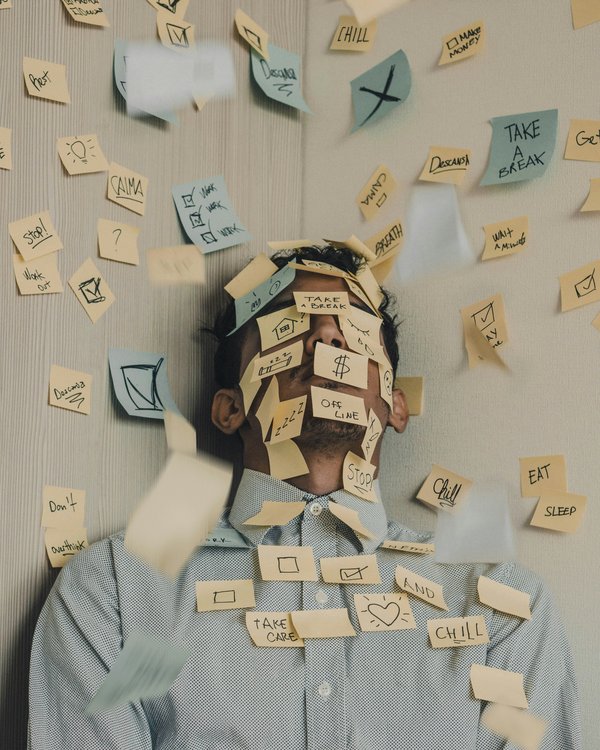
Managing stress is, above all, about spotting the initial signs of overheating that our body emits
We all know about beneficial stress. We are stimulated by a challenge. It’s what helps us pass an exam, tackle a project or reach a new milestone in life.
It’s that “adrenaline rush”, in both the real and the figurative sense of the word, that increases our vigilance and improves our physical and mental performance.
But, like an athlete who’s given their all, like an artist after a show, it’s vital that we are able to release the pressure, to avoid the spiral into exhaustion.
Managing stress is therefore, above all, about being able to disconnect from the causes of the tension, whether they are related to your personal or our professional life.
Going out with friends, having a rest, getting someone to look after the children so you can make time for yourself, talking to your partner… these are all good examples.
A few tips for managing stress better as soon as you spot the initial signs
- Take a close look at your lifestyle: A healthy diet, regular exercise and moderation when it comes to stimulants such as coffee or alcohol play a vital role. And not just for combatting stress.
- Relax: for some this may involve meditation or deep-breathing, whereas for others it could be yoga, massage or a creative activity.
- Take time for yourself, disconnect from those omnipresent screens, and take several short breaks throughout the day.
- At work and at home, learn to set limits, talk to a trusted person, or write your feelings down on paper.
- Set yourself simple and realistic goals and write down three good things every day.
- Lastly, if your stress continues or if symptoms worsen, don’t hesitate to speak to your doctor or a health professional.
From burn-on to burn-out
Burn-on refers to the first phase of professional exhaustion. You start dipping into our energy reserves to deal with chronic stress, without ever recovering. You are present at work, but exhausted and less productive. The term “presenteeism” is sometimes used to describe the act of being present at work when your health doesn’t really allow you to be fully productive.
Burn-out (or professional exhaustion syndrome) refers to the final stage which can occur if you don’t intervene during the burn-on phase. This is complete, deep exhaustion that results in having to stop work, with symptoms similar to those of severe depression which, in some cases, may require hospitalisation.
What are the warning signals?
Managing your stress is also about listening to your body and mind to detect the first signs of “overheating” as stress becomes continuous: fatigue, sleep problems, irritability, forgetfulness and occasionally demotivation.
In fact, these are telltale signs of burn-on and, if you don’t take notice of them, there is a real risk of sliding towards the disease of the century: burn-out.
It is widely believed that burn-on starts when we have been overheating for at least a month. Like a battery that’s running out: little by little, without ever being recharged, our body enables us to cope with it, but our neurotransmitters and stress-resistance hormones (dopamine, cortisol) are being depleted and, insidiously, a series of indicators start switching on:
physical (fatigue, sleep problems, headaches, dizziness, weight loss or gain, etc.);
emotional (hypersensitivity, irritability, anxiety, etc.);
motivational (loss of self-confidence, loss of motivation);
cognitive (memory and concentration problems, feeling as though one’s mind is blank, etc.).
Burn-out: easier to prevent than to cure
It is thought that after just 6 months of “overheating”, there is a big risk of sinking into burn-out.
The symptoms are the same in nature, but infinitely more intense: fatigue turns into complete exhaustion, anxiety may end in severe depression, motivation is at zero and the patient becomes entirely ineffective.
The term “allostatic crash” is sometimes used to refer to the point when, in the face of everyday stresses, our body and mind surrender.
Aside from the personal impact, the economic cost of burn-out is considerable. In Luxembourg, the Quality of Work Index 2024 by the Chamber of employees (CSL) and the University of Luxembourg reported an alarming finding, observing that 51% of the employees questioned, presented with acute or heightened psychological distress.
There are several consequences to a burn-out and the sequelae are severe
Among other things, the CSL pointed to the hotel and catering industry, commerce, construction, healthcare and employees with atypical working hours. In the most affected sectors, the situation could even be described as an emergency, with an extremely high number of employees experiencing burn-out, work-related depression and major sleep disorders.
We all have a colleague or friend who has been the victim of actual burn-out, so we know it can have very severe sequelae: these can take several months or even years to recover from as well as, occasionally, permanent cognitive disorders to the extent that 1 in 6 people becomes unable to return to work.
For all these reasons it is vital to react and pay close attention to the initial warning signs.
Do you want to start exercising again?
That’s an excellent idea! Look for a sports activity that you will enjoy.
Take advantage of what’s on offer near work or home. There are plenty of options in Luxembourg, between initiatives such as the “Sport for everyone” (“Sports pour tous”) offered by the City of Luxembourg (gym, fitness, water sports, team sports, etc.) and those organised by municipalities such as Esch-sur-Alzette (multisport, adaptive skiing, etc.), not to mention outdoor sports (walking, cycling) and indoor sports (tennis, dance), which are accessible everywhere, at any age and for all levels.
Health insurances from DKV Luxembourg
Discover