


Home & Living
Prevention
The sun is part of our life balance, but it can also pose a major risk to our skin. Dermatologist Florence Bourlond, from the Centre Hospitalier de Luxembourg, reminds us of the importance of prevention, early screening and simple everyday habits to get into to reduce the risks of skin cancer.
About the author
This article was written based on a presentation by Sandrine Stauner-Facques, Communications Officer at DSB Communication, in collaboration with DKV Luxembourg.
Any change should be a warning: early screening can save lives
Although often trivialised, skin cancer is one of the most common cancers. It encompasses several forms with very different evolutions, from localised lesions that can be treated easily, to more aggressive and potentially serious melanomas. If detected early, it can be effectively treated in the majority of cases.
Skin cancers with very different profiles
It’s important to make a distinction between Non-Melanoma Skin Cancers (NMSC), i.e. all the skin cancers that are not melanoma, and melanoma. Among the NMSC we primarily find basal cell carcinomas and squamous cell carcinomas, as well as more rare forms such as Merkel cell carcinoma.
Basal cell carcinoma is the most common skin cancer in the world and can appear relatively early, as from the age of 30 to 35. It is strongly linked to sun exposure and is more likely to affect people with light skin who are frequently exposed to sunlight. When it is diagnosed and treated in time, it does not produce metastases and responds very well to treatment. Squamous cell carcinoma also often has a good prognosis but, in rare cases, and if left untreated for a long time, it can evolve into more severe forms and affect the lymph nodes.
Lastly, melanoma is the most dreaded form. It develops from pigmentation cells and can resemble a mole or “beauty spot”, which sometimes makes it hard to detect. It is the skin cancer type that demands the greatest vigilance.
The ABCDE rule: A simple guideline for everyone
The ABCDE rule makes it possible to spot the early signs of a melanoma. It is based on five clear criteria that are easy to remember.
A – Asymmetry: a mole becomes suspect when its two halves no longer match and it loses its regular shape;
B – Borders: you should pay close attention when the edges of a mole become irregular, blurred or jagged;
C – Colour: when a mole has several different shades in it or changes colour, that’s a warning sign;
D – Diameter: a lesion that increases in size may be an indicator even if this criterion alone is insufficient to make a diagnosis;
E – Evolving: this is the most important sign. Any change in shape, colour, texture or appearance should lead to a doctor’s appointment.
The main risk factor
The main risk factor is exposure to ultraviolet rays, whether at work or in your free time. This particularly concerns tennis coaches, construction workers, gardeners and roofers, who are exposed continuously. It also applies to certain leisure activities such as golf, sailing or skiing, during UV rays combine with reflected light to significantly increase exposure. Immunodepression is another significant risk factor, particularly in patients receiving treatments that suppress the immune system, with an increased risk of squamous cell carcinomas, amongst others. Some rare genetic diseases such as xeroderma pigmentosum also make the skin extremely sensitive to UV and require maximum protection from early infancy.
Prevention: vital, everyday habits to get into
Above all, prevention relies on limiting sun exposure, especially between 12 pm and 4 pm, when the UV rays are most intense.
When exposure is unavoidable, it is advisable to wear clothing that covers your skin, a wide-brimmed hat and sunglasses to limit the areas of skin exposed as much as possible.
People such as construction workers who work outside, or athletes who do regular outdoor sports activities, must use these physical protective measures systematically, because they offer an effective and sustainable barrier to UV.
Sun creams that provide very high protection, including SPF 100, are available in pharmacies and are especially for use by people who are at risk or who have already had skin cancer. They offer stronger protection and can be applied several times a day. They must always be integrated into an overall sun protection strategy. You must also ensure you protect the frequently forgotten areas such as the ears.
An increase in cases, but better detection
We are now seeing a general increase in skin cancer. This evolution can be explained by several factors: in particular a generation of people who have been more exposed to UV when travelling, past use of sun beds and an improvement in our diagnostic capabilities. Today, cancers are detected earlier, which allows for more effective treatment and helps to limit the increase in mortality.
Screening and vigilance: an essential reflex
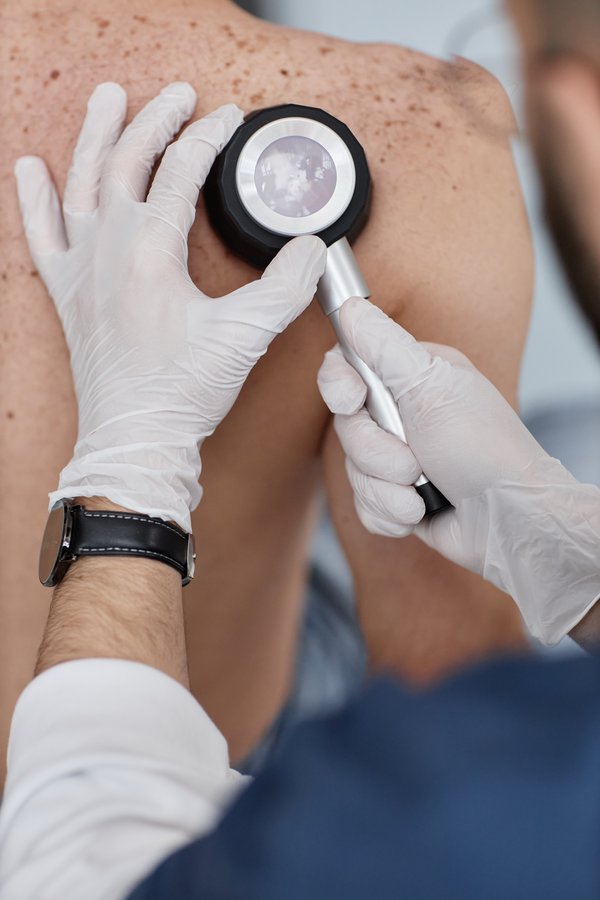
Regular surveillance of the skin (your own and that of your loved ones) is vital and the slightest change should be considered a warning sign. The first step is to consult your general practitioner who will refer you to a dermatologist if necessary. Screening campaigns such as European prevention week also play a part in raising the general public’s awareness, even if the most exposed populations can still continue to be the hardest to reach. Information is available on the euromelanoma.eu website.
A vital message for prevention
The fundamental message remains simple: never trivialise a change in your skin. Any alteration in a mole or anything that appears suspicious should quickly lead to a doctor’s appointment, because early screening is still the best defence against severe forms of skin cancer.
DKV Luxembourg health insurance
Discover