
Home & Living
Prevention
An accident involving another vehicle, a collision with a stationary car, a multiple-vehicle collision or an accident abroad: these situations are unfortunately part of the risks involved when driving. Knowing how to respond in the event of a car accident will help you to keep your cool, to make sure anyone involved is safe, to comply with the legal procedures in Luxembourg and to facilitate your insurance company’s handling of the claim. Here is a practical guide to help you every step of the way.
A car accident isn’t limited to the visible damage on a vehicle. It can have consequences:
- for your safety and that of the other passengers;
- for your immediate mobility;
- for the time required for you to receive compensation and the compensation amount.
The initial decisions made at the scene of the accident are often determining factors. Being well-informed helps you to avoid making mistakes, to limit stress and to preserve your rights as an insured party.
Secure the scene and ensure the safety of the people involved to avoid further accidents
As soon as an accident happens, the priority is to consider your own safety and that of the other passengers:
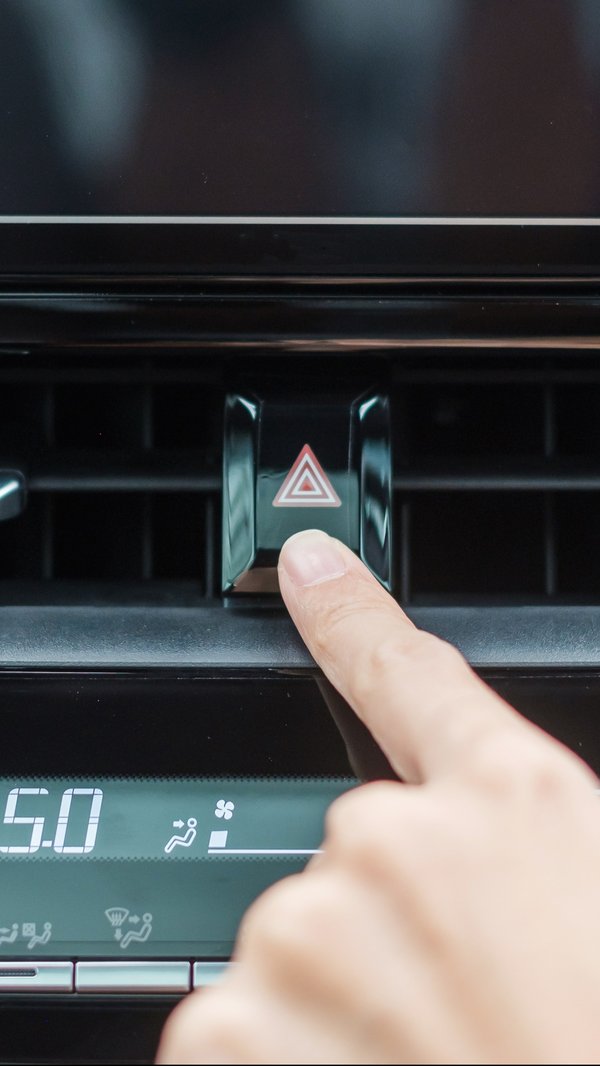
- Start by turning off the engine and putting on your hazard lights;
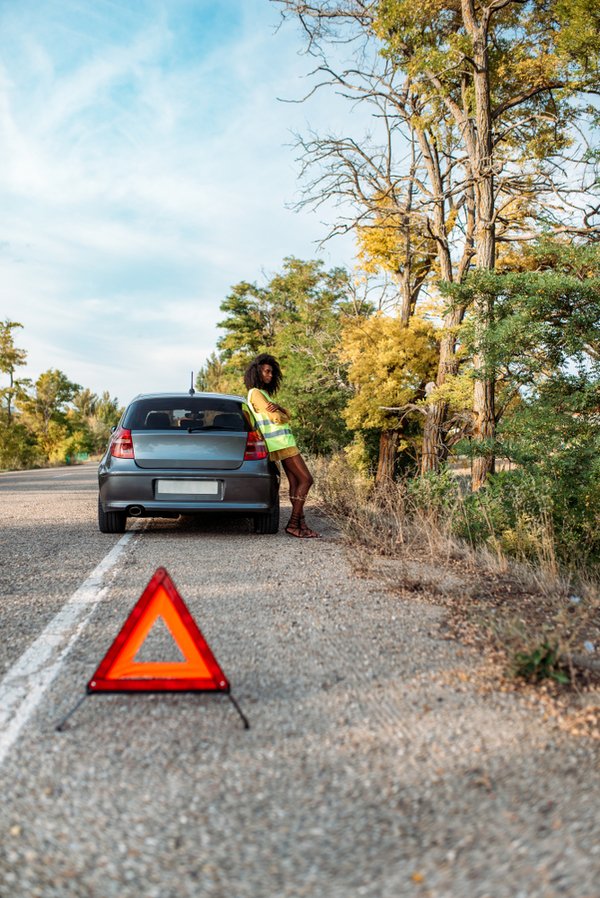
- Before you get out of the vehicle, put on your reflective safety vest;
- If you’re in an urban area or on a country road, secure the scene of the accident by putting your warning triangle in a safe and visible place behind your vehicle to alert other drivers.
Next, move to a safe place, away from the flow of traffic, to fill out the accident report form, for example in a car park or service station. Several secondary accidents occur after an initial collision, often due to a lack of visibility or adequate warning signs.
If anyone is injured, contact 112 for emergency services and 113 for the police immediately.
Special precautions in the event of an accident on the motorway
The golden rule: if the vehicle can still be driven, leave the motorway at the next exit or meet at the nearest service station to fill out the accident report safely.
If this isn't the case, park the vehicle as far over to the right as possible, (for example on the hard shoulder) and turn on the hazard lights. On the motorway, there is no need to put out a warning triangle; the most important thing is to move all the passengers to safety, away from any vehicles and lanes of traffic. After putting on their yellow or orange safety vests, all passengers must get out of the vehicle carefully on the right-hand side and wait behind the safety barriers. Only then, should you call emergency services.
If you get stuck in a tunnel, the procedure is the same. Go to the nearest SOS recess to protect yourself and use the emergency phone.
Important :
Please note that changing a tyre or carrying out repairs yourself is prohibited on a public road. You must also never try to stop other vehicles on the motorway by driving on the emergency lanes or on the hard shoulder. If your car is immobile, call a breakdown service to have your car removed as quickly as possible.
Do you always have to call the police if you have an accident in Luxembourg?
The Grand-Ducal Police recommendations are clear. The police should be called in the following circumstances:
- if anyone is injured, even mildly, or if there is immediate danger, call the emergency number for the police 113;
- if there is a disagreement between the drivers or a dispute over the accident report;
- if someone fails to stop at the scene;
- if public goods have been damaged;
- if one of the drivers appears to be under the influence of alcohol or drugs.
However, in the event of a simple, damage-only collision, in which no one is injured and there is no dispute, police intervention is not mandatory.
Accident involving a pedestrian, cyclist or motorcyclist: heightened vigilance
These accidents involving pedestrians, cyclists or motorcyclists require particular attention because these road users are considered much more vulnerable. The physical consequences can be much greater, even if the injuries aren't immediately visible.
The steps to take are identical to those for a car accident. In this type of situation, never underestimate the severity of the accident and call the emergency services immediately (112 or 113).
General rules to know in the event of a motorcycle accident:
Never move an injured person, unless they are in immediate danger (fire, risk of explosion or danger from traffic). This also applies to motorcycle riders’ helmets, which you must never remove before the arrival of the emergency services. While waiting, monitor the victim and reassure them. Any unnecessary movement of the victim could make their injuries worse.
What should you do if you have a car accident abroad?
An accident abroad may seem more complex, but the steps to take are similar. Use the European accident report form, check that the country is included on your insurance certificate (previously the “green card”) and contact your LALUX insurer as soon as possible.
The legislation of the country in which the accident took place is applicable to determine responsibility and compensation. This can sometimes make the process lengthier.
Recommendations in preparation for going abroad:
- Take a European accident report form with you if you are travelling by car or renting a vehicle at your destination: It is still the most recognised document for simplifying procedures.
- Obtain the necessary documents: check whether you need an international driving licence (this is often mandatory outside of Europe).
- Check the safety equipment: Find out what equipment is mandatory in the destination country (for example: winter tyres, safety kit).
- Plan your itinerary in advance: Check the traffic info and familiarise yourself with the traffic regulations in the countries you are travelling through, for example the speed limits, rights of way and the permitted alcohol limits.
- Adopt defensive driving techniques: maintain safety distances and be vigilant at junctions.
What if I hit a parked car when the driver is not present?
In this situation, it is vital that you do not leave the scene because failing to stop can incur severe sanctions.
What you should do:
- Secure the area and wait: Park your vehicle and put on your hazard lights, then wait a while to see if the owner returns.
- Leave your details: If the owner does not appear, leave a note where it can be seen easily (under the windscreen wiper) with your name, telephone number and your registration number.
- Call the police: you are strongly advised to call the police (113) to have the damage documented. This will protect you against any false accusations of failing to stop.
- Take photos and fill out an accident report: State “Parked vehicle” for the other party.
Step 2: The accident report is a key document
The accident report constitutes the basis for the accident claim file. It enables insurers to understand the facts, to assess responsibilities and to commence the compensation process.
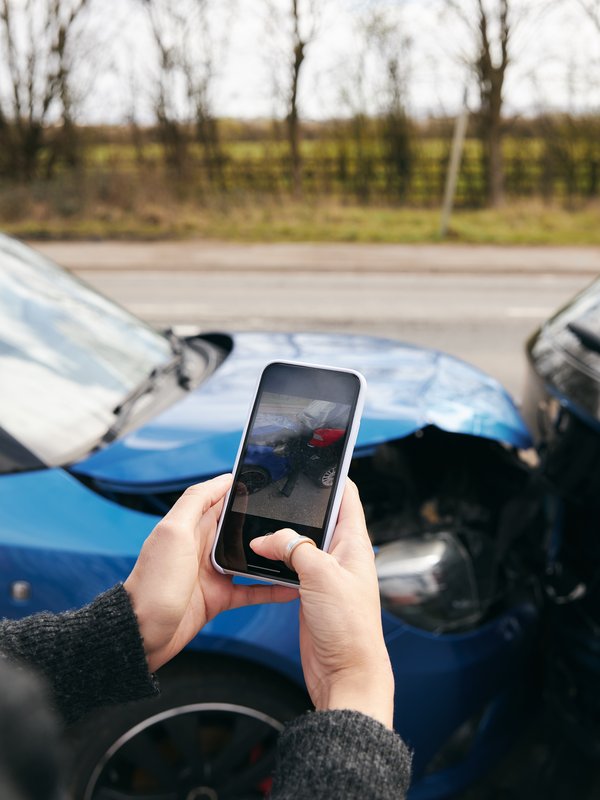
Once all the passengers are safe, it is important to fill out the accident form properly ensuring it is legible and complete. A simple but accurate account, accompanied by photos of the scene and the vehicles involved, will significantly facilitate analysis of the claim file.
Never sign an accident report that does not reflect your perception of the facts. In the event of a disagreement, mention it in the “Observations” section.
Get more advice on how to fill out your accident report correctly in our dedicated guide.
The accident report has been filled out. What now?
As soon as your Road traffic accident report has been filled out, all you need to do is to give one of the two copies to the other driver. Each driver must then pass it on to their respective insurer.
Important documents to provide to your insurer as quickly as possible:
- the completed and signed accident report;
- photos of the accident, the damage and position of the vehicles;
- any witnesses’ details;
- a police report if one has been made;
- a medical certificate in the event of any injuries, even minor ones.
The more complete your accident statement is, the easier it will be to handle your claim.
How should you submit a car accident claim to LALUX?
Contact your LALUX agent as quickly as possible and provide them with the necessary documents. You can also make your accident claim through the Compensation department or through the easyAPP mobile app or the easyAPP Home customer area.
What happens after the claim has been submitted?
Once you have submitted the accident claim, the insurance company will analyse your policy and the cover purchased. Depending on the nature and extent of the damage, an automotive expert may be appointed to assess the damage and to determine if the vehicle is repairable as well as the cost of the repairs.
The relevant insurers will then confer with each other to determine who is responsible, using the information provided on the accident report. Responsibility is then established, which makes it possible to define the conditions for compensation.
How does compensation work?
In all cases, the material and physical damage that you may cause to a third party are covered by the Civil liability car insurance, which is mandatory for every motorised vehicle that is used on public roads.
However, the compensation for material damage sustained by your own vehicle depends on the guarantees and the cover provided by your car insurance policy.
Compare the different car insurance formulas and find out which type of cover best suits you.
Step 3: Assistance, breakdown and towing - Your insurer is there for you
Car emergencies aren't limited to accidents. A breakdown, a flat battery, a flat tyre or a misfuel can all render your vehicle immobile, sometimes at the most inopportune moments. That’s why it’s important to check with your insurer in advance whether the type of insurance policy or vehicle is covered by a breakdown guarantee.
Top Assistance: immediate help in the event of an emergency
With easyPROTECT Auto, you automatically benefit from the Top Assistance service, which is included in every formula. Accessible 24/7, this service is valid in Luxembourg and abroad in countries covered by the green card.
Breakdown service, towing and onward travel
If the vehicle can’t be repaired at the roadside, breakdown service or towing is organised quickly. Depending on the situation, your car will be taken to a garage or repatriated.
Top Assistance also takes care of the occupants. If the vehicle will be immobile for an extended period, we offer mobility solutions, such as:
- a replacement vehicle (for up to several days depending on your formula);
- arranging your return home;
- help to find accommodation, where necessary.
Our aim is simple: to prevent you getting stranded and enable you to continue your journey with peace of mind.
Find out about Top Assistance in detail, LALUX’s breakdown and towing solution.
Mistakes to avoid after a car accident
There are certain common mistakes that can complicate the claim process:
- leaving the scene of an accident without securing the area and without filling out an accident report;
- forgetting to take photos (both close-ups and a wider views) and not documenting the accident correctly;
- exceeding the time limits for making a claim;
- having the vehicle repaired prior to the expert’s assessment or without your insurer’s agreement.
Whether you have an accident or breakdown, it is vital to take the right action. To be well prepared, just in case, it is advisable to keep on hand in every car: reflective safety vests (for every vehicle occupant), a warning triangle, a mobile phone (with an external, charged battery) and a blank accident report form.
easyPROTECT Auto
Safety behind the wheelAdvice on how to complete your accident report
En savoir plus